Introduction to the Bhagavad Gita
What Is the Bhagavad Gita?
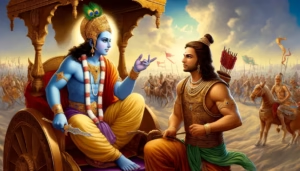
The Bhagavad Gita is not just a religious scripture; it’s a timeless manual for life. Set on the battlefield of Kurukshetra, it captures a profound conversation between Lord Krishna and the warrior Arjuna. But don’t let the battlefield fool you; this war is symbolic. Bhagavad Gita and Self-Realization Understanding the Ultimate Truth of Life It represents the inner conflict every human faces when confused, afraid, or lost.
Historical and Spiritual Background
Written over 5,000 years ago, the Gita is part of the Mahabharata. Yet its teachings feel uncannily modern. Why? Because human struggles haven’t changed. Anxiety, purpose, identity, and fear—these are ancient problems wearing modern clothes.
Why the Gita Is Still Relevant Today
In a world obsessed with speed and success, the Bhagavad Gita whispers a powerful truth: know yourself. It offers clarity when life feels noisy and direction when choices feel overwhelming.
The Core Concept of Self Realization
What Does Self-Realization Mean?
Self-realization is the awareness of who you truly are beyond your name, job, body, and thoughts. It’s like realizing you are the sky, not the passing clouds.
Difference Between Ego and the True Self
The ego says, “I am this body, this success, this failure.” The true Self says, “I am the observer.” The Gita teaches that suffering begins when we confuse the two.
Why Humans Struggle With Self Awareness
We’re trained to look outward achievements, opinions, possessions. Self realization asks us to turn inward, which feels uncomfortable at first, like entering a silent room after a loud concert.
Bhagavad Gita’s Perspective on the Self
Atman—The Eternal Soul
According to the Bhagavad Gita, the Atman (soul) is eternal, unchanging, and indestructible. Bodies age, roles change, but the Self remains untouched.
Body vs Soul According to the Gita
Krishna explains that the body is like clothing—you wear it for a while and then move on. This simple metaphor dissolves the fear of loss and death.
The Immortal Nature of the Self Once you truly grasp this, life feels lighter. Fear loosens its grip, and courage becomes natural.

Lord Krishna’s Teachings on Self-Realization
Self-Knowledge as the Highest Wisdom
Krishna doesn’t promote blind belief. He promotes understanding. Knowing the Self is described as the highest form of wisdom.
Role of Consciousness in Self-Discovery
Awareness is the gateway. When you observe your thoughts instead of being trapped in them, self-realization begins.
Detachment as a Tool for Realization Detachment doesn’t mean indifference. It means involvement without bondage—like playing a game wholeheartedly without losing yourself in the score.
Karma Yoga – The Path of Action
Karma Yoga – The Path of Action
Doing Duty Without Attachment
The Gita teaches action without obsession over results. Focus on effort, not outcome.
How Karma Yoga Leads to Self Realization
When actions are free from ego, the mind becomes pure, making self-realization possible.
Real-Life Examples of Karma Yoga
A teacher teaching with love, not for praise. A doctor serving without greed. This is Karma Yoga in action.
Jnana Yoga – The Path of Knowledge
Knowledge as a Destroyer of Ignorance
Ignorance is mistaking the temporary for the permanent. Knowledge clears the fog.
Self Inquiry and Inner Awareness
Asking “Who am I?” repeatedly cuts through layers of false identity.
Wisdom vs Information
Wisdom transforms. Information only informs. The Gita focuses on the former.
Bhagavad Gita and Self-Realization: Understanding the Ultimate Truth of Life
Bhakti Yoga – The Path of Devotion
Surrendering the Ego
Devotion melts the ego. When you surrender, resistance disappears.
Love and Devotion as Tools of Self Discovery
Through love, the heart opens, revealing the Self naturally.
Emotional Connection With the Divine
Bhakti turns spirituality into a relationship, not a rulebook.
The Role of Mind in Self-Realization
Controlling the Restless Mind
The mind is like a wild horse. With practice and detachment, it can be trained.
Mind as Friend or Enemy
A disciplined mind supports self realization; an uncontrolled one blocks it.
Meditation and Inner Silence
Silence is not empty—it’s full of answers.
Detachment and Desirelessness
Why Desire Causes Suffering
Desire itself isn’t the problem; attachment is.
Freedom Through Detachment
Detachment brings freedom, not emptiness.
Living Fully Without Attachment
You enjoy more when you cling less—paradoxical, yet true.
Overcoming Fear and Death
Fear Comes From Misidentification
When you identify with the body, fear arises. Identify with the Self, fear fades.
Understanding Death Through the Gita
Death is a transition, not an end.
Liberation From the Fear of Loss
Nothing real is ever lost.
Self-Realization and Daily Life
Applying Gita’s Wisdom at Work
Work becomes worship when done with awareness.
Relationships and Self Awareness
Understanding yourself helps you understand others.
Inner Peace in a Chaotic World
Peace isn’t found outside—it’s remembered inside.
The Gita’s Universal Message
Beyond Religion and Culture
The Bhagavad Gita speaks to humanity, not labels.
A Guide for All Humanity
Its wisdom applies whether you’re a student, parent, or leader.
Spirituality Without Escapism
The Gita teaches engagement, not escape.
Modern Relevance of the Bhagavad Gita
Mental Health and Inner Balance
Its teachings reduce anxiety and overthinking.
Leadership and Decision-Making
Detached clarity leads to better decisions.
Living a Purpose-Driven Life
Purpose arises naturally from self-realization.
Signs of Self Realization
Inner Stability and Clarity
Ups and downs lose their power.
Freedom From External Validation
You no longer outsource your worth.
Compassion and Wisdom
Understanding yourself makes you kinder.
Common Misconceptions About Self-Realization
Is It Renunciation of Life?
No. It’s full participation without bondage.
Is Self Realization Only for Saints?
Absolutely not. It’s for anyone willing to look inward.
Truth vs Spiritual Myths
Self realization is practical, not mystical fantasy.
Final Lessons From the Bhagavad Gita
Living as a Witness
Observe life instead of drowning in it.
Aligning With One’s True Nature
When alignment happens, effort reduces.
The Journey, Not the Destination
Self realization is a deepening, not a finish line.
Conclusion
The Bhagavad Gita reveals that self-realization is not an escape from life but a deeper embrace of it. By understanding the eternal Self, acting without attachment, and living with awareness, life transforms from a struggle into a meaningful journey. Bhagavad Gita and Self-Realization: Understanding the Ultimate Truth of Life. The Gita doesn’t ask you to change your life. It asks you to change how you see it. And once that shift happens, everything else follows naturally.
Frequently Asked Questions (FAQs)
1. What is self-realization according to the Bhagavad Gita?
Self-realization is the awareness of the eternal soul beyond body and mind.
2. Can a normal person achieve self-realization?
Yes, the Gita is written for householders, not just monks.
3. Does self-realization require renunciation?
No, it requires detachment, not withdrawal.
4. Which yoga path is best for self-realization?
All paths—Karma, Jnana, and Bhakti—lead to the same truth.
5. How long does self-realization take?
It’s not about time; it’s about understanding and consistency.
For more blogs, click here…